

Streetside Heritage Garden
This garden is where my ecological design aspirations first met the native ecology of the shrub steppe, hopefully the beginning of a lifelong collaboration.
The garden demonstrates the beauty of shrub steppe native plants and low-carbon, local materials through a simple design that balances ease of movement with ample planting space. The garden is divided into four beds based on soil type – Standard, Sandy, Lithosol, and Sunken (water-needier plants), showcasing the diversity of shrub steppe habitat and ensuring plants are in conditions that support their thriving.
The garden was highly inspired by Brad Lancaster’s work (harvestingrainwater.com), but adapted to the native ecology of Eastern Washington’s shrub steppe.
The garden features local basalt stone sourced from roadsides and a dairy a few miles out of town and urbanite (reused broken concrete) salvaged from a sidewalk on the same property and other sites. The original design included a cob wall, but the proximity of delicate tree roots led me to choose to build a corrugated metal fence instead since it will require a smaller foundation (which is a work in progress).
Note: As mentioned above, the wall was planned too close to the existing trees for their health. If protecting trees is a priority, it is recommended that soil is not disturbed within the canopy of a tree, which mirrors the extent of its roots belowground.
Location: Eastern Washington Shrub Steppe
Year: Designed 2020, Plants first planted Fall 2020, Plan drawn in 2021, Section drawn in 2022, Construction Ongoing
Services Completed: Design, Plant Sourcing, much of the Construction & Maintenance
Plants from: Tapteal Native Plants, CBWNPS Native Plant Sale, Derby Canyon Natives, CTUIR Native Nursery, Go Natives!, wild-harvested seed
Additional help from: My parents!
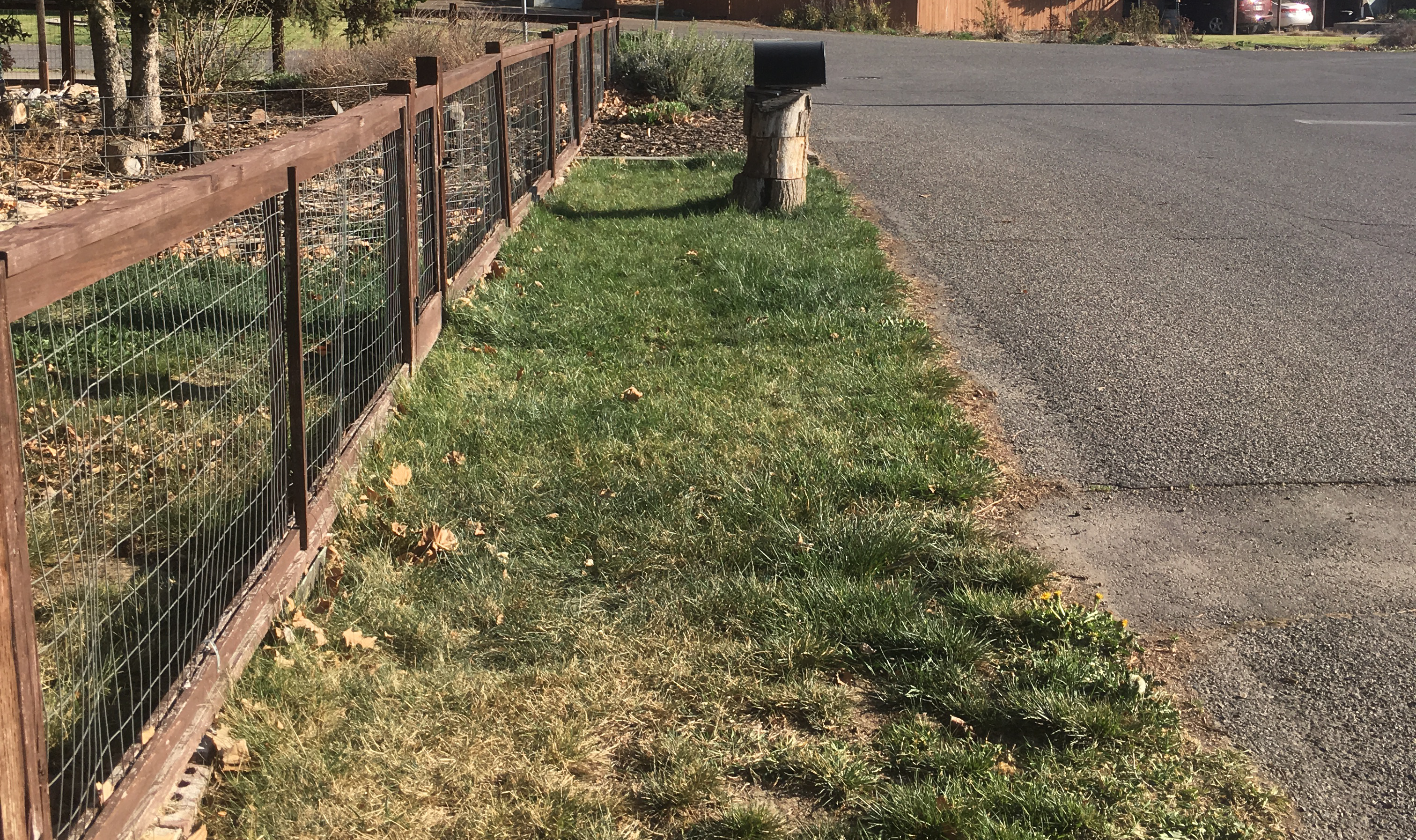
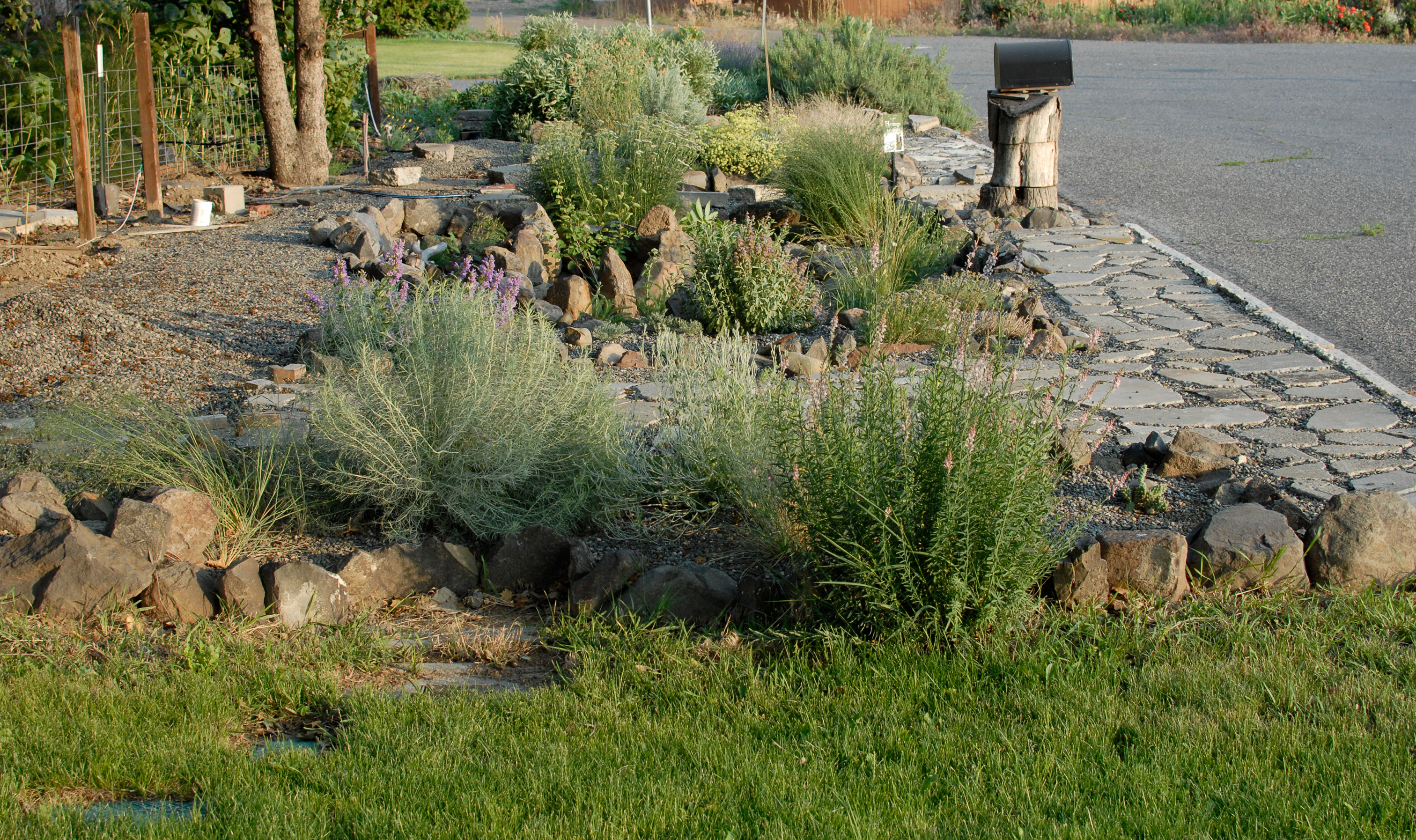
Image Descriptions:
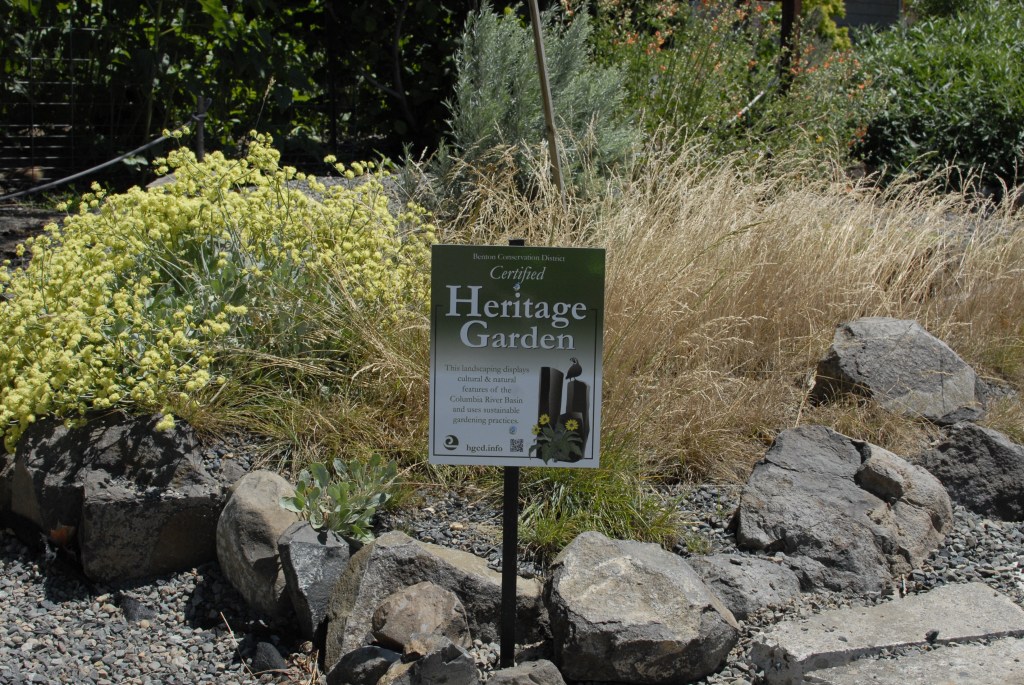
Top, 1: A basalt-lined bed planted with dry grasses and shrubs. A Certified Heritage Garden sign is in the bed.
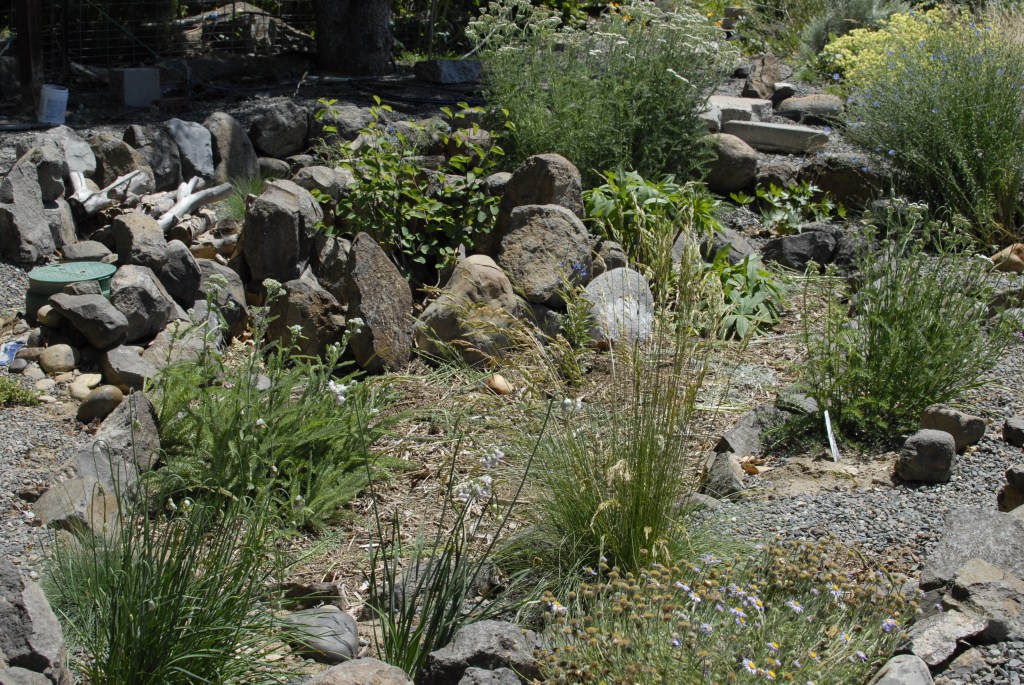
Top, 2: The sunken bed of the heritage garden. Lush green plants are in the basin and the terrace surrounding it. Organic covers the bottom of the basin and rock mulch is on the terrace. A ‘talus garland’ surrounds the young serviceberry bush in the basin.
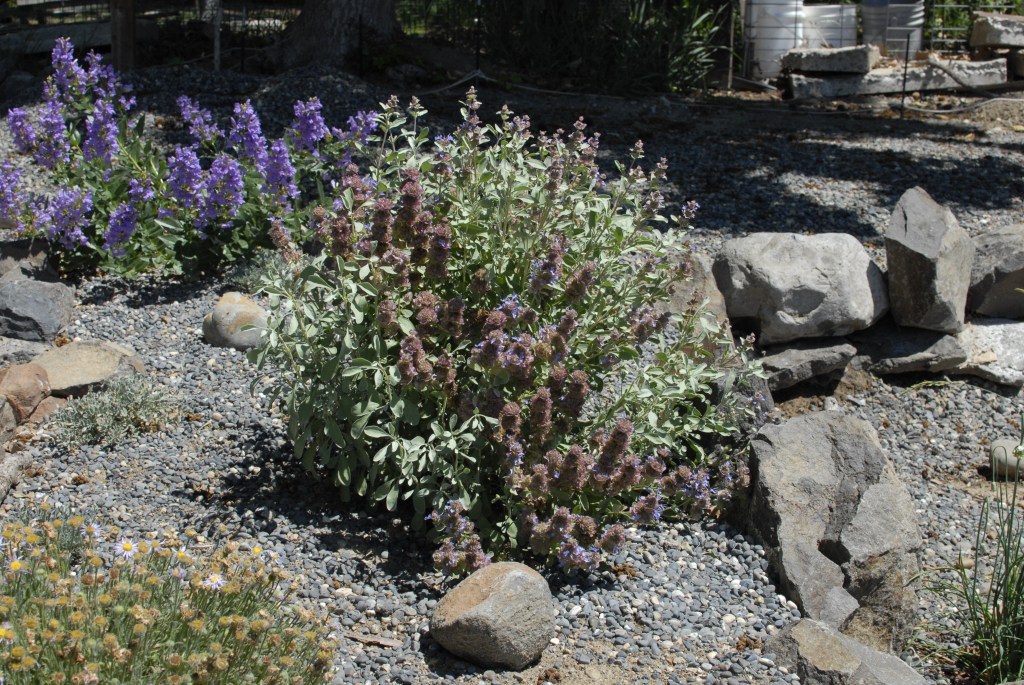
Top, 3: A purple sage (Salvia dorrii) plant in a rock-mulch covered planting bed. A penstemon (Penstemon venustus) plant is behind the sage.
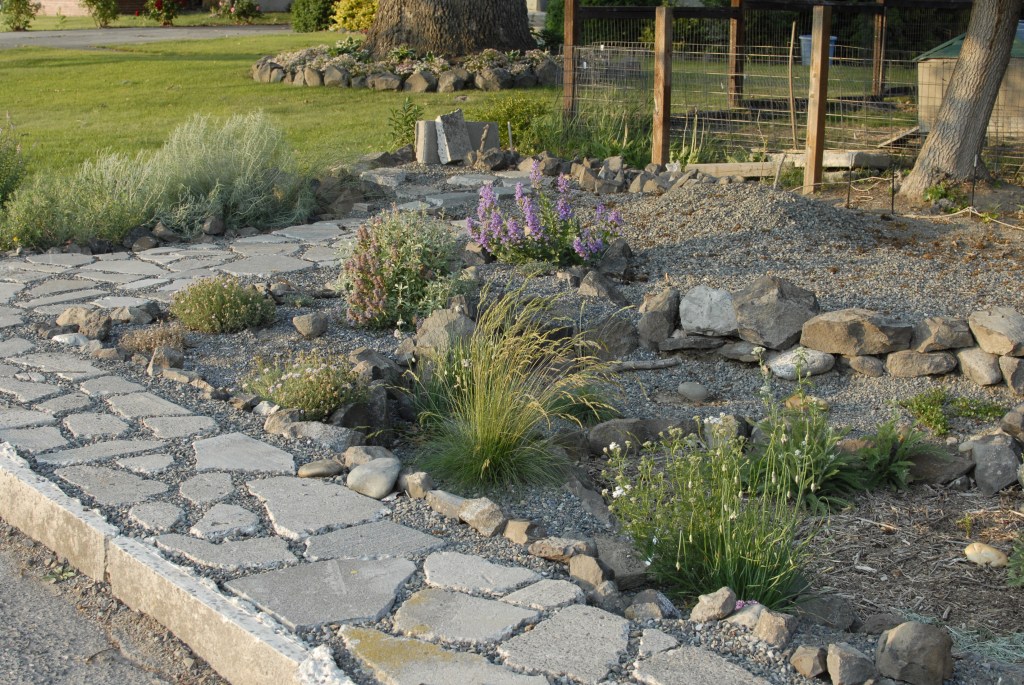
Top, 4: A view of the standard bed of the garden with the other beds behind. Paths made of urbanite (reused concrete pieces) with gravel between or just gravel are between the beds.
Top, 5: A view of the sandy bed to the left of an urbanite path and the rocky and sunken beds to the right of that path. Green and gray-green plants are in the planting beds.
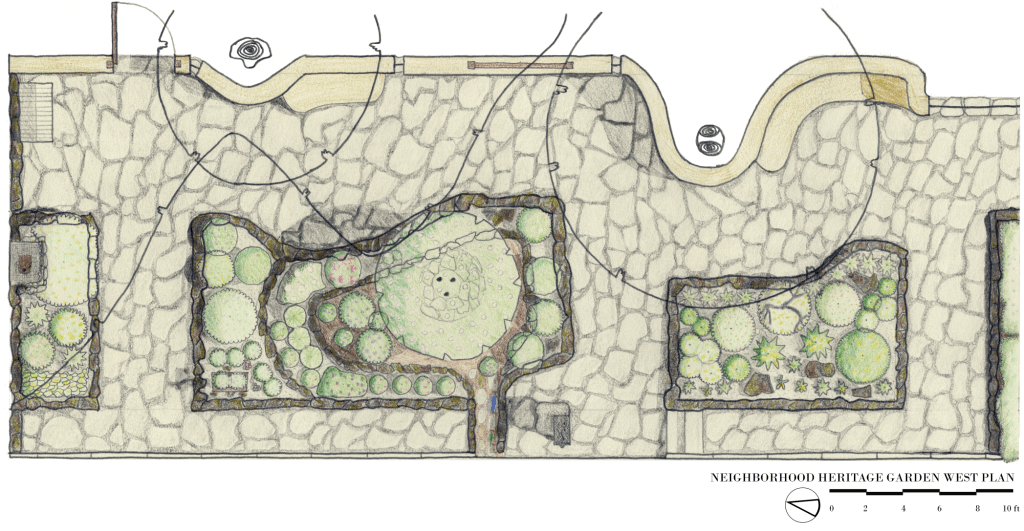
Top, 6: Colored pencil drawing of the garden.
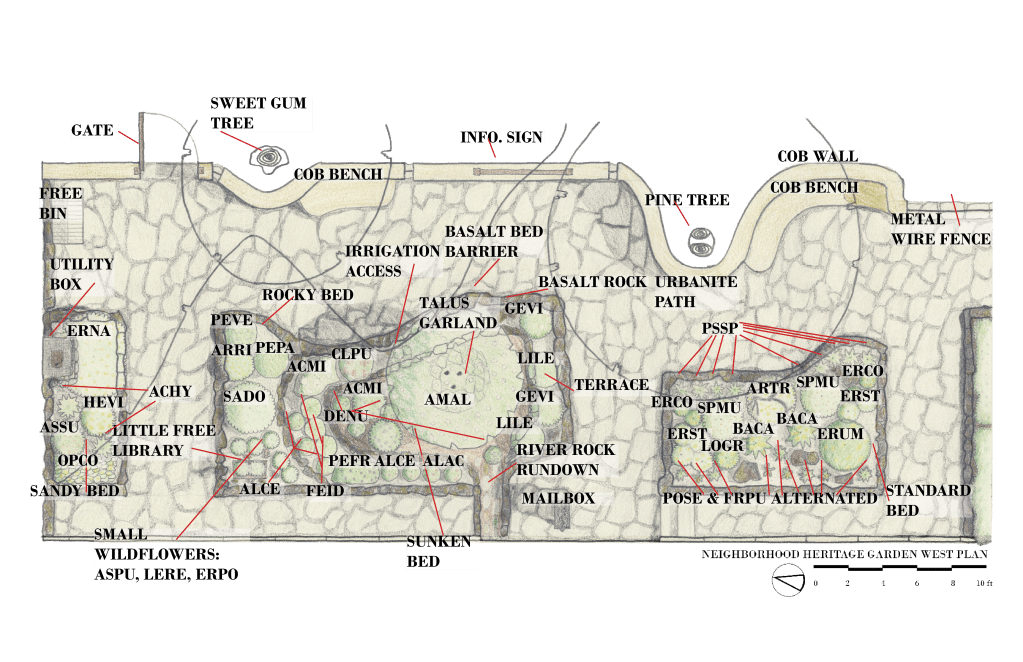
Top, 7: The second image is the same as the first but faded with labels of design elements and plants. The image is aligned with north toward the left side of the image. The beds from north to south are labeled: sandy bed, rocky bed, sunken bed, standard bed. The beds are lined with basalt and the paths between the beds are wide and made of recycled concrete (AKA urbanite). A cob wall with a gate is east of the garden beds. A few cob benches protrude from the cob wall.
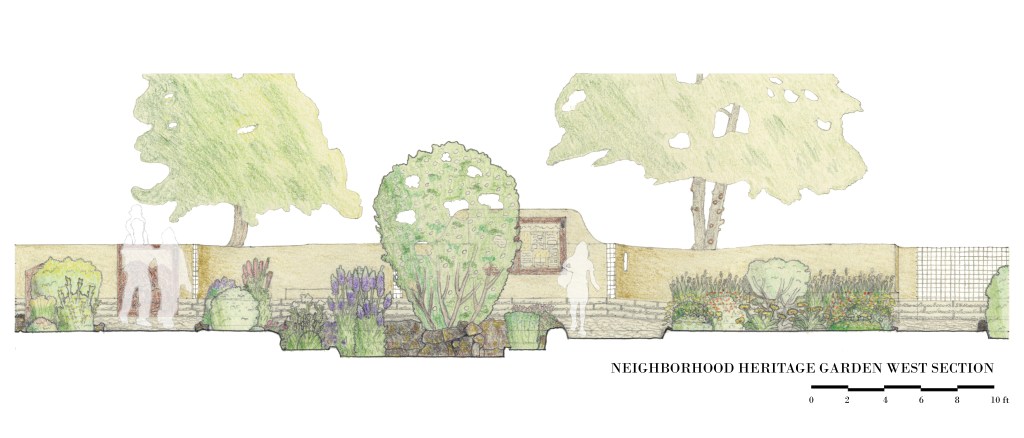
Top, 8:
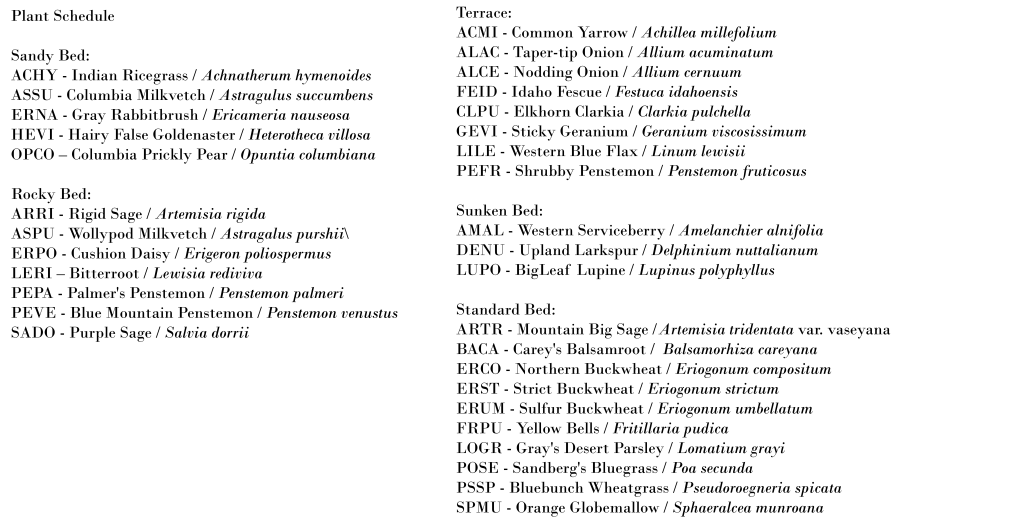
Top, 9: Plant Schedule for design. Sandy Bed: ACHY – Indian Ricegrass / Achnatherum hymenoides, ASSU – Columbia Milkvetch / Astragulus succumbens, ERNA – Gray Rabbitbrush / Ericameria nauseosa, HEVI – Hairy False Goldenaster / Heterotheca villosa, OPCO – Columbia Prickly Pear / Opuntia columbiana
Rocky Bed: ARRI – Rigid Sage / Artemisia rigida, ASPU – Wollypod Milkvetch / Astragalus purshii, LERI – Bitterroot / Lewisia rediviva, PEPA – Palmer’s Penstemon / Penstemon palmeri, PEVE – Blue Mountain Penstemon / Penstemon venustus, SADO – Purple Sage / Salvia dorrii
Terrace: ACMI – Common Yarrow / Achillea millefolium, ALAC – Taper-tip Onion / Allium acuminatum, ALCE – Nodding Onion / Allium cernuum, FEID – Idaho Fescue / Festuca idahoensis, CLPU – Elkhorn Clarkia / Clarkia pulchella, GEVI – Sticky Geranium / Geranium viscosissimum, LILE – Western Blue Flax / Linum lewisii, PEFR – Shrubby Penstemon / Penstemon fruticosus
Sunken Bed: AMAL – Western/Saskatoon Serviceberry / Amelanchier alnifolia, DENU – Upland Larkspur / Delphinium nuttalianum, LUPO – BigLeaf Lupine / Lupinus polyphyllus
Standard Bed: ARTR – Mountain Big Sage / Artemisia tridentata var. vaseyana, BACA – Carey’s Balsamroot / Balsamorhiza careyana, ERPO – Cushion Daisy/Fleabane / Erigeron poliospermus, ERCO – Northern/Heartleaf/Arrowleaf Buckwheat / Eriogonum compositum, ERST – Strict Buckwheat / Eriogonum strictum, ERUM – Sulfur Buckwheat / Eriogonum umbellatum, FRPU – Yellow Bells / Fritillaria pudica, LOGR – Gray’s Desert Parsley / Lomatium grayi, POSE – Sandberg’s Bluegrass / Poa secunda, PSSP – Bluebunch Wheatgrass / Pseudoroegneria spicata, SPMU – Orange Globemallow / Sphaeralcea munroana
 Woollypod Design