
Public Native Garden Template
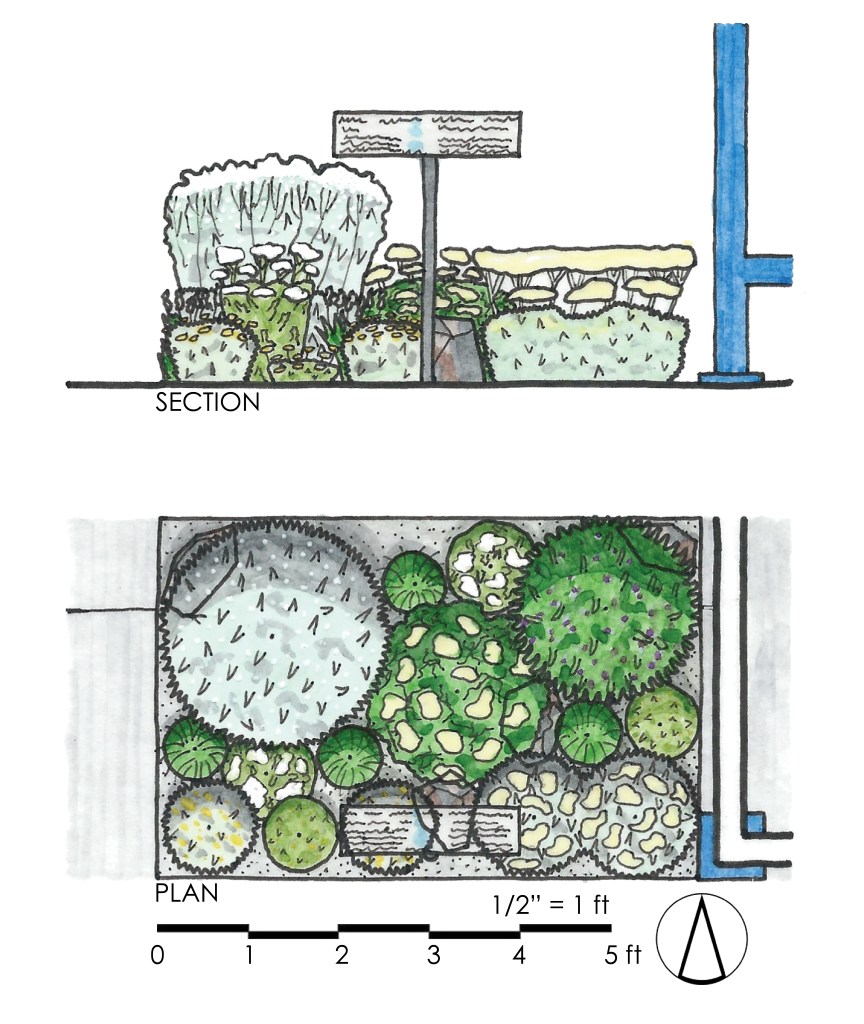
This project is a native plant garden template intended for small urban planting beds on streets or at public spaces such as libraries. The plan drawing depicts a garden in a 4’ by 6’ space next to a bus stop. This design is intended to provide diverse habitat for native pollinators in an urban setting while educating community members about the beauty and value of native plants. It would also reduce watering costs to almost none and provide a low-maintenance space.
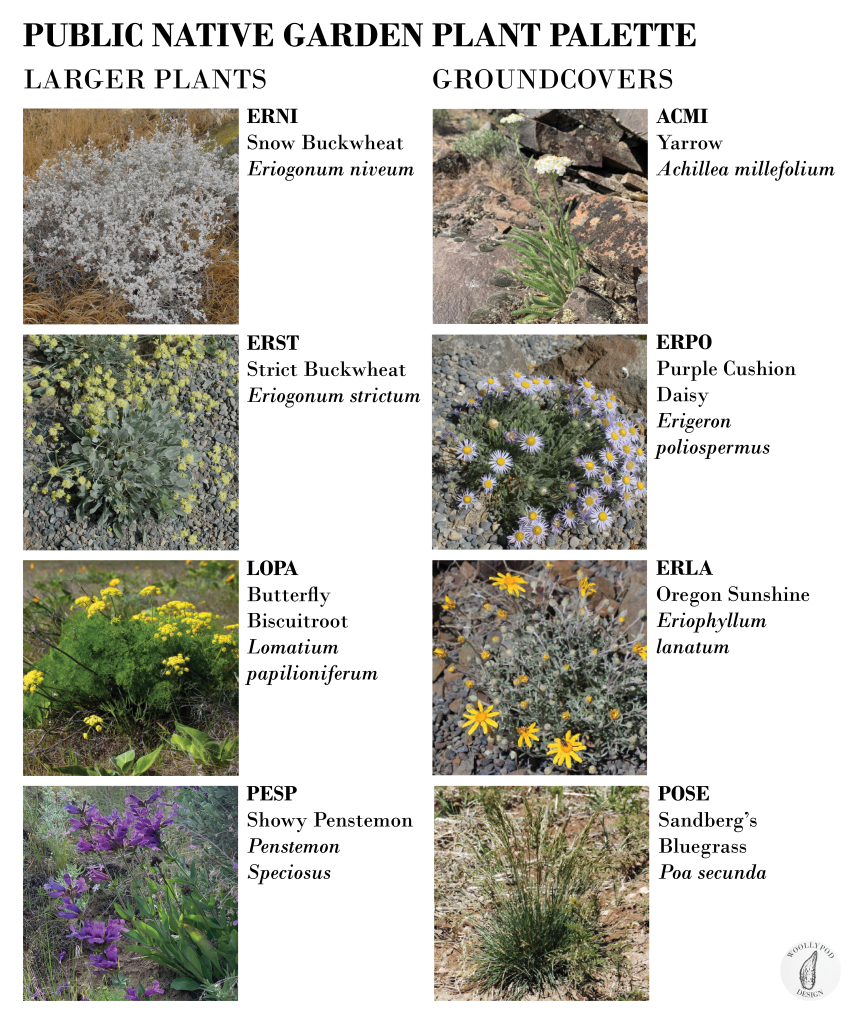
Fast-growing, hardy plants adapted to a standard soil (since sandy or rocky soils are less common) were prioritized to prevent weed invasion and provide beauty and a finished garden look in a short time. Plants were limited to smaller species to create a more contained and accessible look for an urban environment. Eriogonum niveum was added to the mix since it blooms late in the season, ensuring that color would be present in the garden throughout much of the growing season. All plants survive with 10 or less inches of water, fitting a harsh urban environment which may receive small amounts of excess runoff from nearby sidewalks. Plants were also chosen to have a range of bloom colors and growth forms to showcase the diversity of our native habitats. Several small plants were included, such as Poa secunda and Erigeron poliospermus, to create a robust groundcover to resist weed invasion and provide more visual interest to passerby in a small planting area. The plant list could be added or subtracted to depending on the size of the planting space and the context. The amount of plants planted could be reduced to one per species (minimum) with the knowledge that plants would seed themselves, although this would increase the need for weeding until plants self-seed and fill the planting area.
Image Descriptions:
1: A plan and section of a native plant garden template drawn with markers. The drawing depicts smaller flowers toward the south side, with larger wildflowers and bushes toward the back. Small grasses and wildflowers fill in the spaces between these plants.
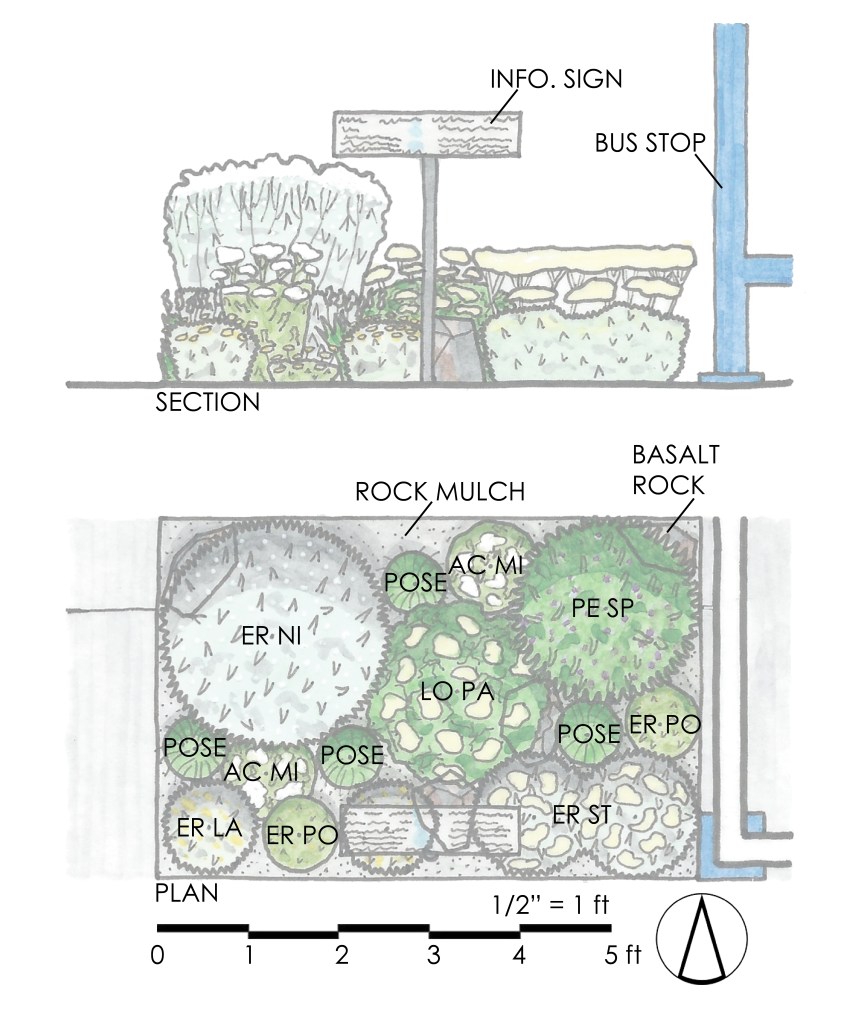
2: A key of the garden, indicating which plant species and design elements are depicted through text overlaid on a low-opacity version of the plan and section.
3: A plant palette of the species in the garden. They are: larger plants – Eriogonum niveum, Eriogonum strictum, Lomatium papilioniferum, Penstemon speciosus. Groundcovers – Eriophyllum lanatum, Poa secunda, Achillea millefolium, Erigeron poliospermus.
 Woollypod Design