
Scorch Refuge
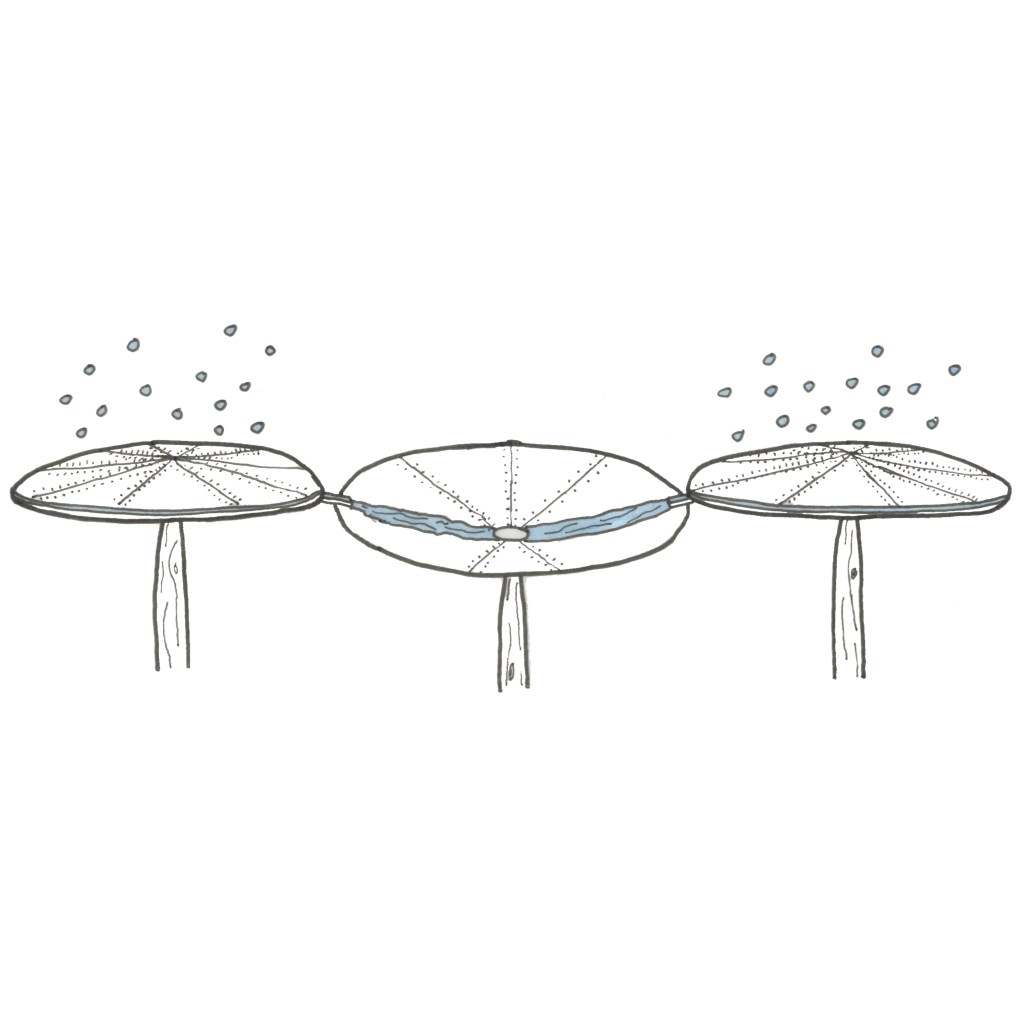
In 2121, the climate chaos unleashed by a destructive society long gone still plagues the world, but community helps weather the storm. The summer drought is long and brutal, and everyone braces themselves for the months where temperatures regularly spike above 110℉. In response, residents have built heat shelters, like this one in the U District. Water captured during the spring and winter torrents is reused to provide cooling mists and baths, and high walls and mushroom-inspired roofs provide maximum shade while solar-panel powered lights retain brightness inside. During the rest of the year, residents use the space for gatherings and work parties where they process the bounty of the oak trees and other food sources around them.
Location: Seattle, Washington
Year: Autumn 2021
Class: L ARCH 300: Intro to Landscape Architecture Design Studio
Additional Credits: Photos sourced from these organizations: Burke Herbarium, Fourth Corner Nurseries, Natives Here, Northwest Meadowscapes, OSU, Watershed Nursery, Multnomah Conservation District, and Illinois Wildflowers. Photo credit to these individuals: Ben Legler, Julie Kane, Don Knoke, M. R. Smith, Marilee Lovit, Andrew Reding, Arthur Haines, Gerry Carr.
Image Descriptions:
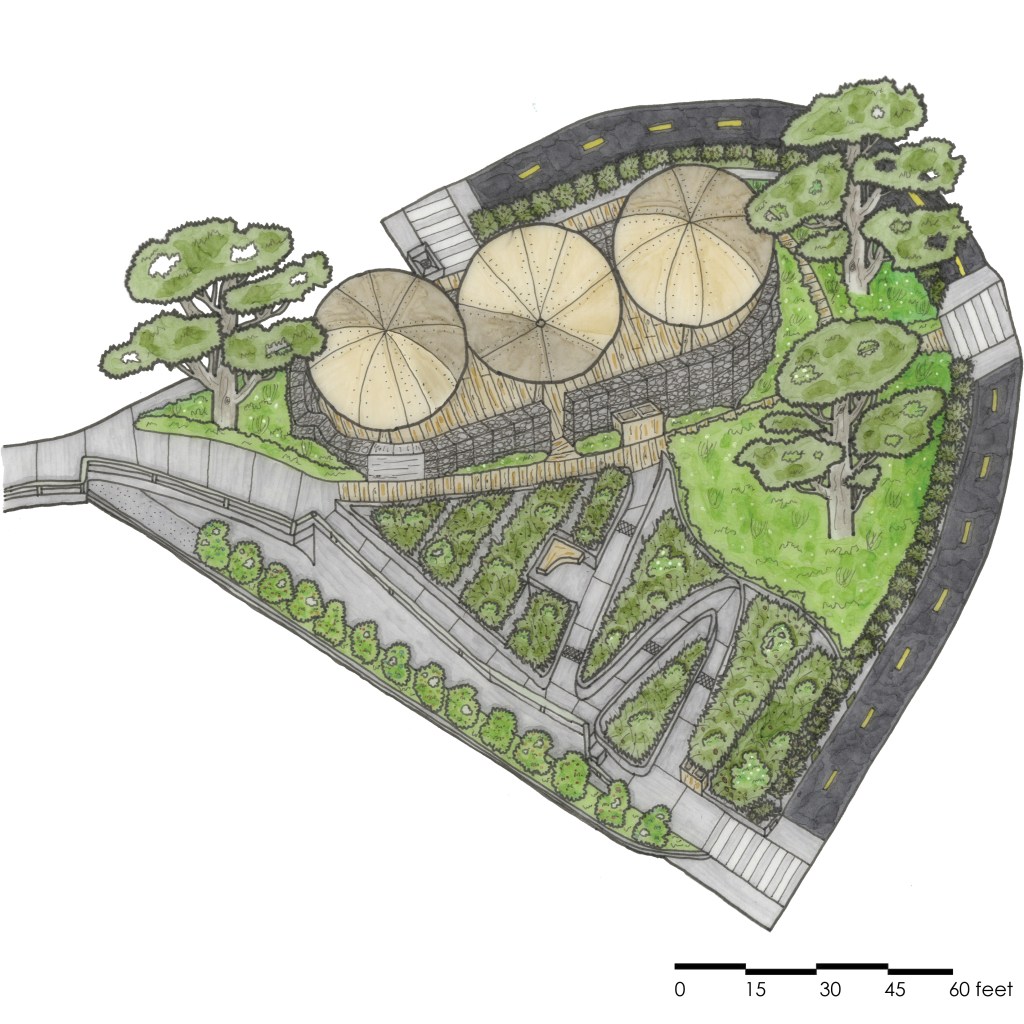
1: An isometric (3D scaled) view of the author’s design. The site slopes up from Southeast to Northwest. The site is surrounded by a two-way bike path interrupted by three raised crosswalks. A wheelchair-accessible path winds through a terraced wetland in the southeast corner. The south of the site consists of bushes south of concrete wall that holds the slope in place. A community space sheltered by mushroom-inspired roofs lies in the northwest side. The rest of the site consists of meadows and boardwalk paths. Three oak trees tower above the site.
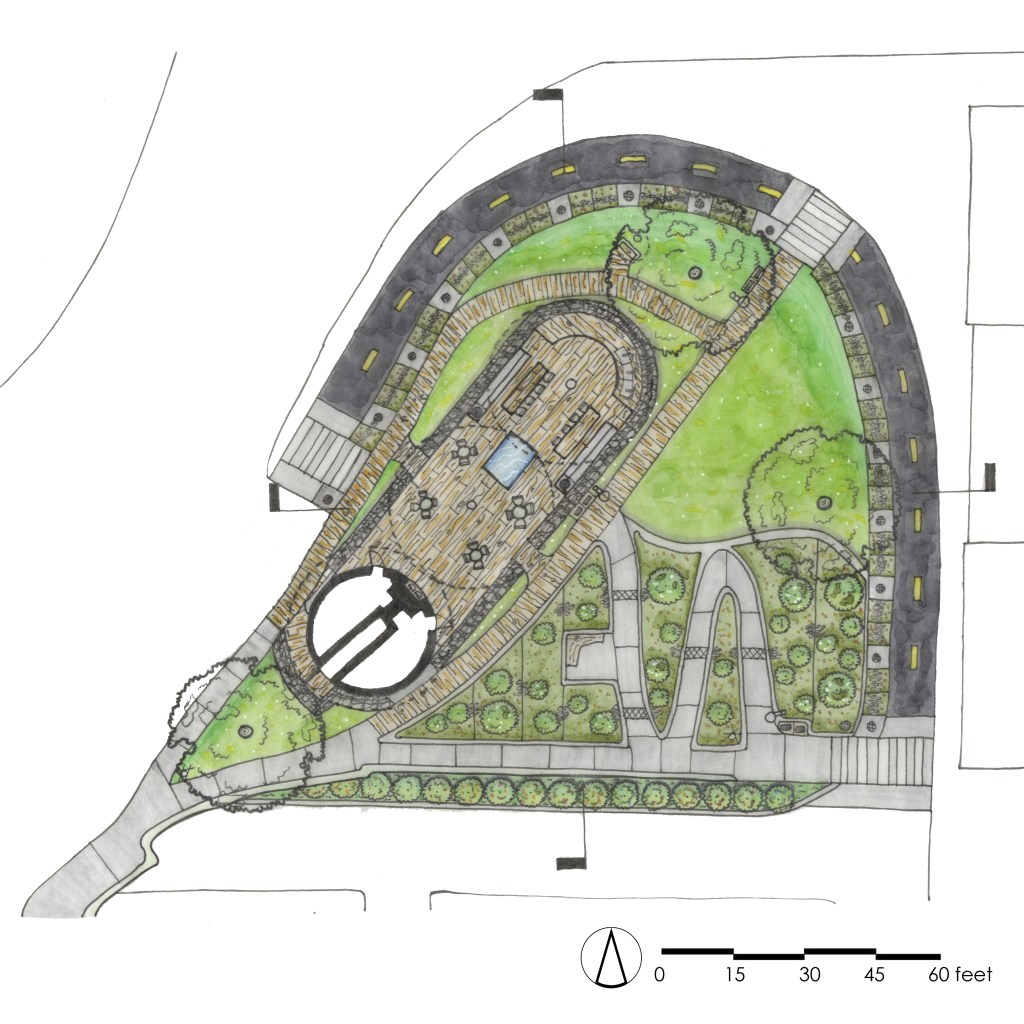
2: A plan (bird’s eye) view of the author’s design. Tables, benches, and chairs are inside the community space. Bathrooms & showers are in the southwest corner and a kitchen is in the northeast corner.
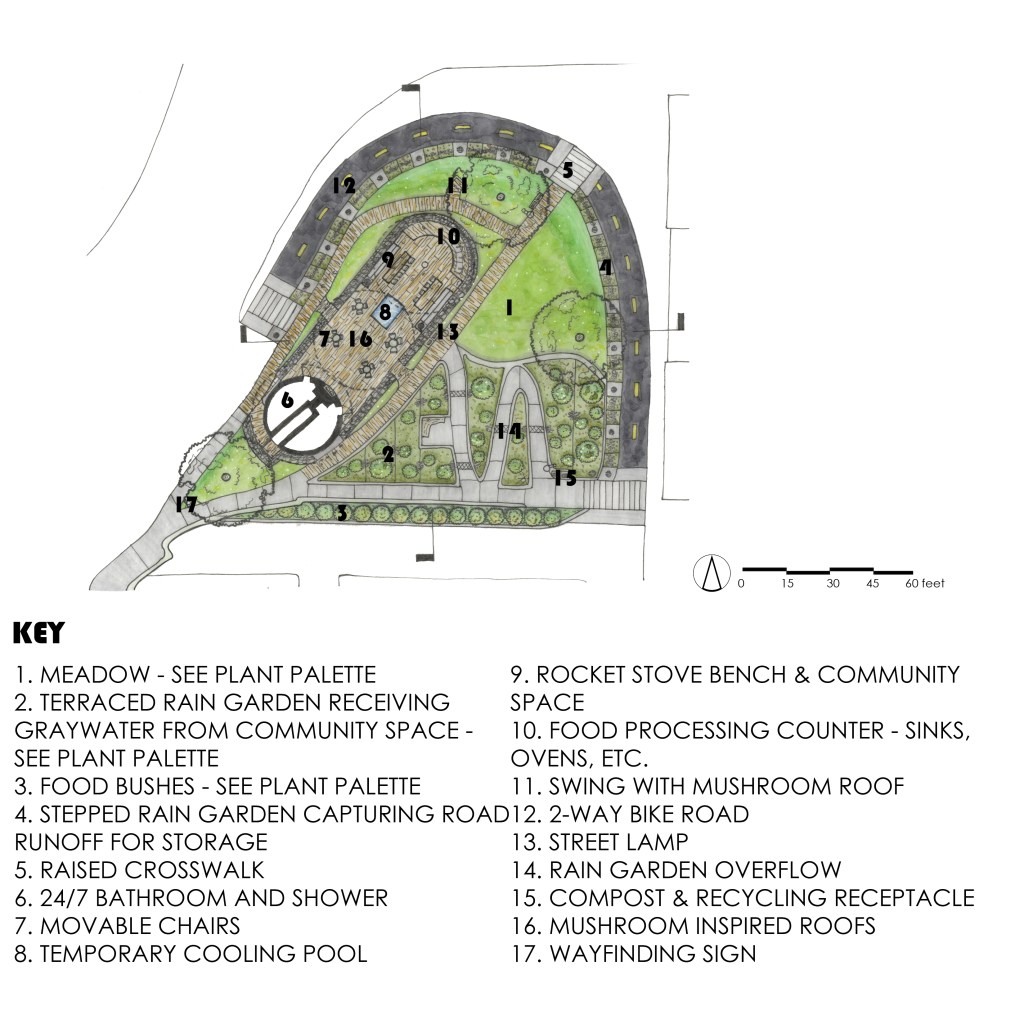
3: The plan view with a numbered key.
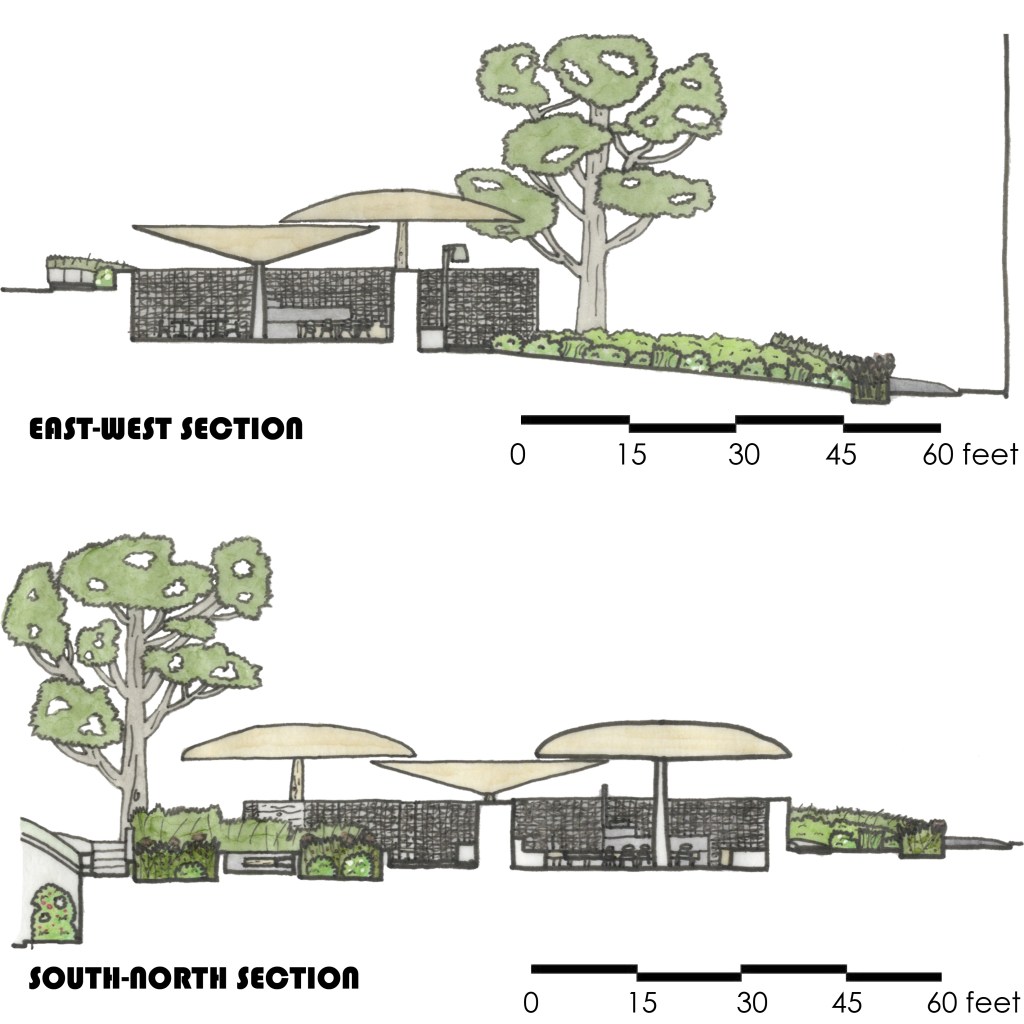
4: Two sections (vertical cut views) of the site, showing the interior of the community space and meadow and wetland plants.
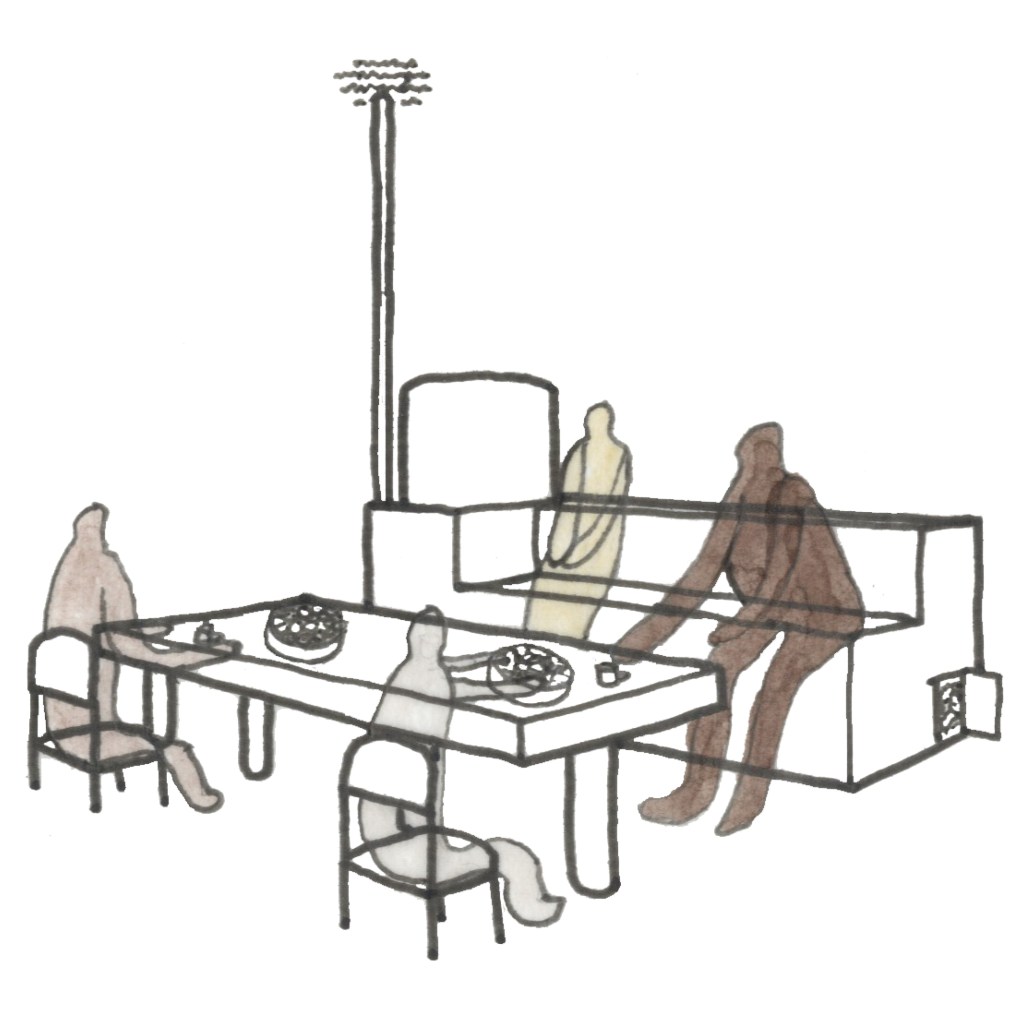
5: A perspective sketch showing a bench with a cylinder at the far end and a smokestack and a fire on the right side. People sit on the bench. Other people sit on chairs across from them, a table with full baskets and mugs between them.
6: A perspective sketch of the community space’s mushroom-inspired roofs. The two outside roofs which are convex are seen catching rainwater and funneling it into the central concave roof.
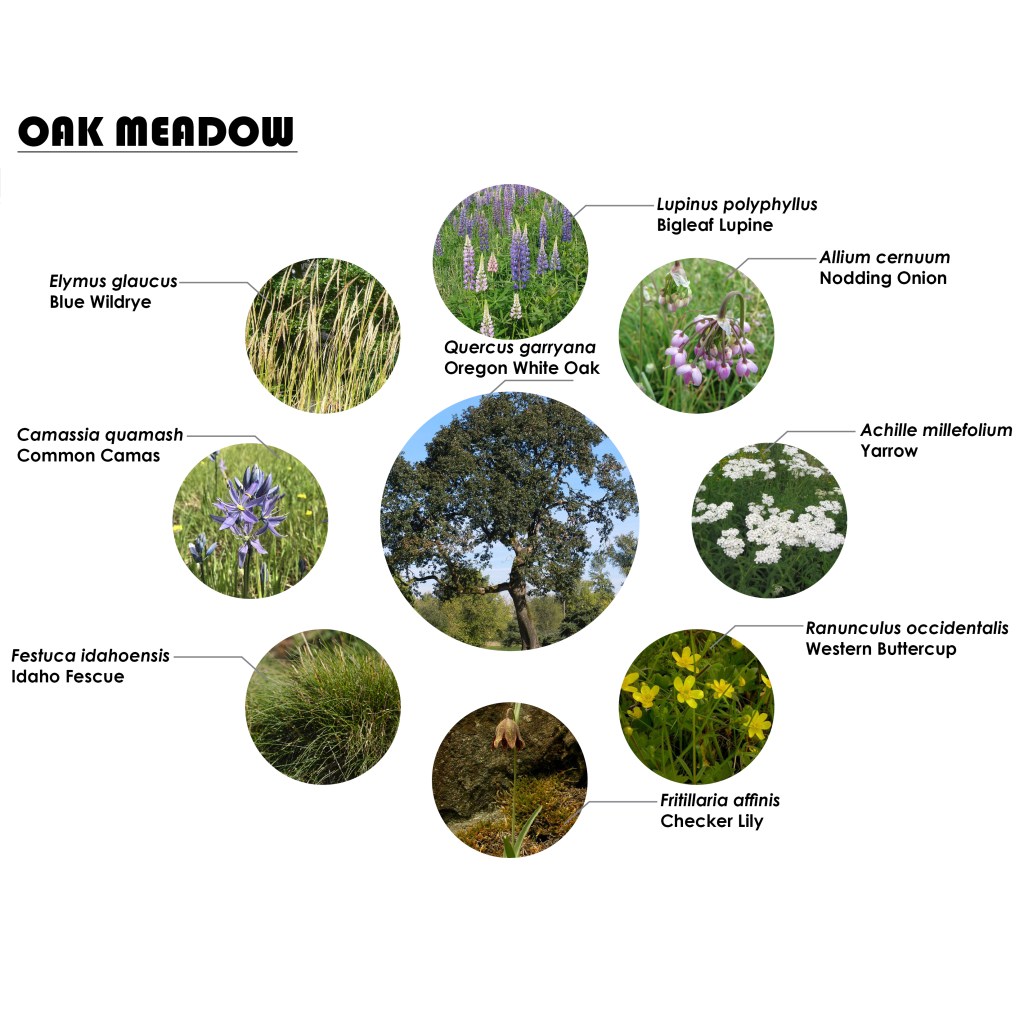
7: A plant palette for the oak meadow plant community. It consists of images cropped into circles arrayed in a circle. The Oregon white oak is in the center, surrounded by yarrow, nodding onion, bigleaf lupine, western buttercup, checker lily, Idaho fescue, blue wildrye, and common camas.
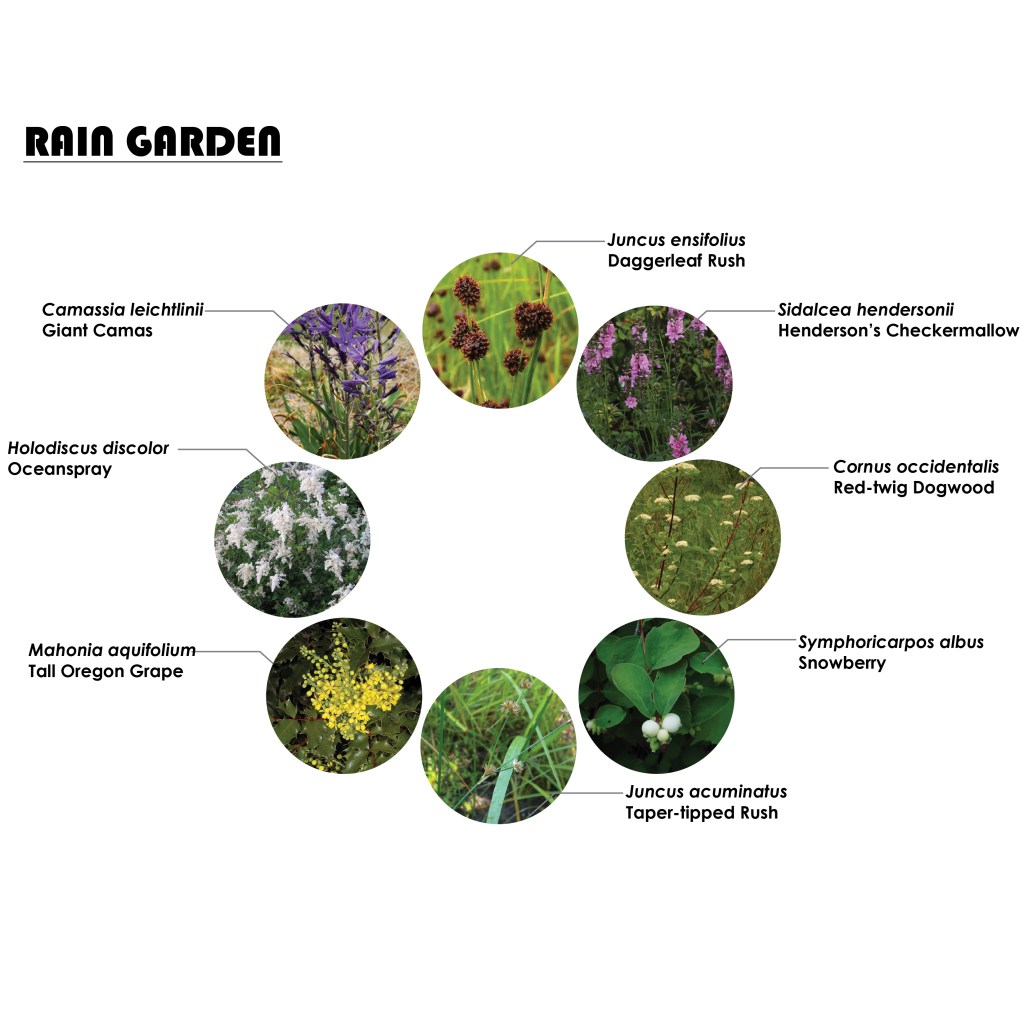
8: A similar plant palette for the rain garden plant community. The plants are: daggerleaf rush, Henderson’s checkermallow, red-twig dogwood, snowberry, taper-tipped rush, tall Oregon grape, oceanspray, and giant camas.
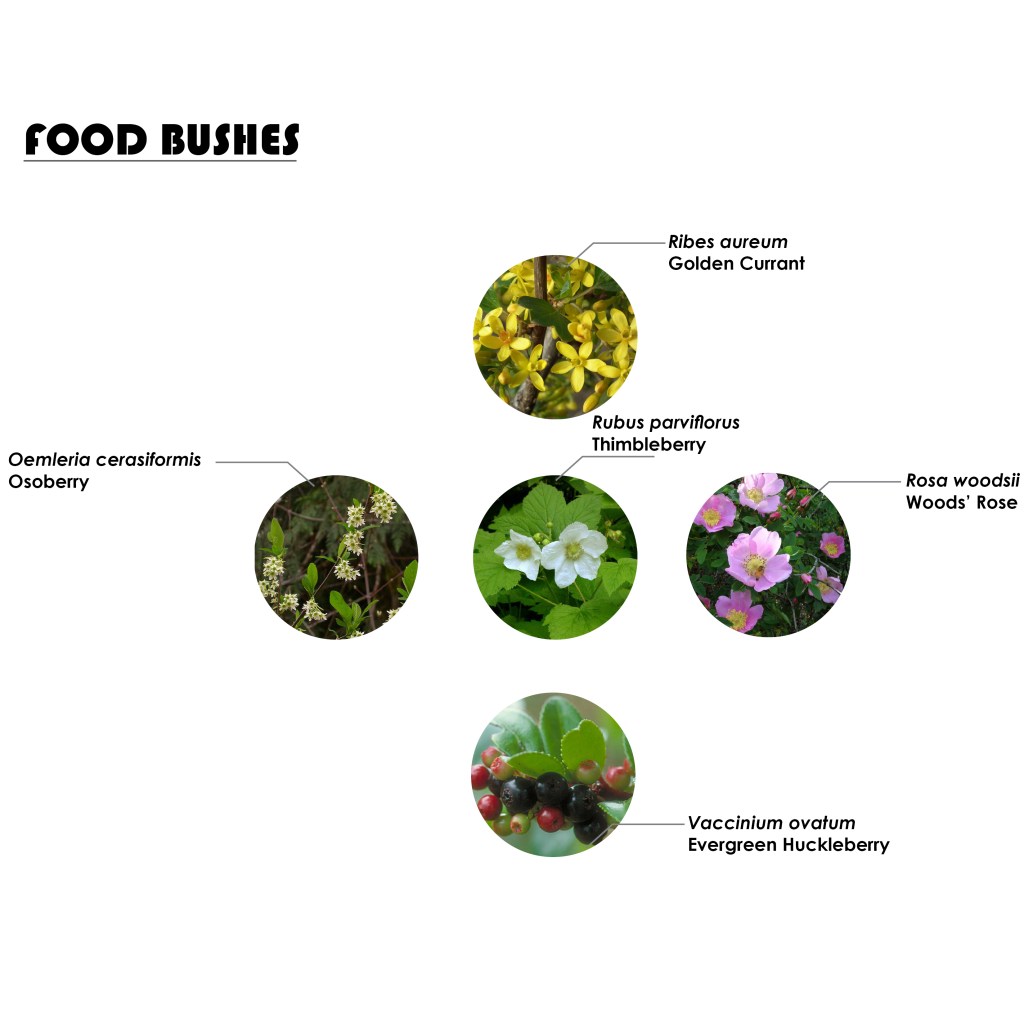
9: A similar plant palette for the food bushes plant selection. The plants are: golden currant, Woods’ rose, evergreen huckleberry, osoberry, and thimbleberry.
 Woollypod Design